
How to Send Corporate Gifts Internationally Without Creating a Logistics Nightmare
How to Send Corporate Gifts Internationally Without Creating a Logistics Nightmare
Sending a thoughtful gift to a client or employee overseas sounds like a fantastic idea—until your VIP in Berlin gets slapped with a surprise €15 customs bill for a €30 hoodie. Suddenly, your brilliant marketing campaign has turned into a massive headache.
If you want to send corporate gifts globally in 2026, you need a bulletproof strategy. The global corporate gifting market is booming past $300 billion, but the logistics of getting a physical item across borders have never been more complex.
This guide breaks down exactly how operations, people, and marketing teams can navigate the wild world of international shipping, avoid customs disasters, and deliver a flawless recipient experience.
What is International Corporate Gifting Logistics?
International corporate gifting logistics is the end-to-end process of sourcing, storing, shipping, and clearing promotional items and gifts across international borders.
In 2026, this process is the single biggest hurdle for global teams. According to the DP World Global Trade Observatory 2026, a survey of 3,500 executives found that every respondent cited customs issues as a top source of global supply chain delays. As Thomas Bailey, Product Innovation Lead at nShift, perfectly summarized: "In 2026, the border becomes an experience design problem. The winners are building 'invisible logistics' where complexity is handled before it reaches the customer" (nShift).
To achieve that "invisible logistics" magic, follow these five essential steps.
Step 1: Master the DDP vs. DDU Dilemma (Spoiler: Always Choose DDP)
The choice between Delivered Duty Paid (DDP) and Delivered At Place (DAP/DDU) is the single most critical factor in your international gifting success.
Always ship your corporate gifts via DDP. Orders shipped via DDP are over 30x more likely to clear customs and deliver successfully compared to DAP shipments in high-risk lanes, according to the ePost Global Shipping Trends Report.
When you ship DDU (Delivered Duty Unpaid), the recipient is legally responsible for the import taxes. Hitting your clients or employees with unexpected brokerage fees is the fastest way to destroy your brand reputation (Flex Fulfillment). Pay the duties upfront so the gift actually feels like a gift.
Step 2: Navigate 2026 Customs Reforms Like a Pro
Customs regulations are shifting rapidly this year, and relying on last year's playbook will get your packages stuck at the border.
The EU Low-Value Parcel Reform: Starting July 1, 2026, the European Union is implementing a major shift for goods under €150, which includes a new fixed €3 fee for small consignments (European Commission). You must factor this into your campaign budgets.
Mexico's Customs Overhaul: On January 1, 2026, Mexico enacted its most significant customs law reform since 1995. This modified over 60 key articles that directly impact how company swag and gifts are taxed and documented at the border (Lexology).
Step 3: Build a Multi-Carrier Fulfillment Strategy
Relying on a single shipping carrier is a recipe for disaster in today's volatile market. In 2025 alone, rerouting events tied to trade and tariff changes skyrocketed by 2,458% (ePost Global).
Use Regional Specialists
For European gifting, don't just default to premium express carriers like DHL or UPS. Regional "workhorse" carriers like GLS, DPD, and MRW often outperform the giants, especially for specific categories like food or temperature-sensitive items (The Gourmet Box).
This is why platforms like Brilliant utilize regional fulfillment centers in the UK, EU, and Hong Kong to bypass long-haul volatility and reduce the environmental impact of every shipment.
Buffer Your Transit Times
Always build extra time into your campaign schedules. In Q1 2026, transit times from Asia to Europe remained structurally elevated at +5 days versus plan (Portcast).
Step 4: Lock Down Recipient Data Privacy (GDPR 2026)
Data privacy is no longer just a legal checkbox; it is a massive operational risk. In 2025, GDPR fines related to non-compliant international data transfers surpassed €1 billion (EDPB).
Using US-based tools to enrich recipient lists (like scraping emails or phone numbers) for international shipping constitutes a data transfer subject to Article 44 of the GDPR. To protect your company, ensure your gifting platform uses secure portals for recipient address collection rather than passing unencrypted spreadsheets back and forth over email.
Step 5: Partner with the Right Corporate Gifting Companies
Trying to manage centralized shipping, local sourcing, customs documentation, and GDPR compliance in-house is exhausting. The smartest operations teams are outsourcing this to specialized corporate gifting companies that have global infrastructure already built.
The Brilliant Approach to Global Fulfillment
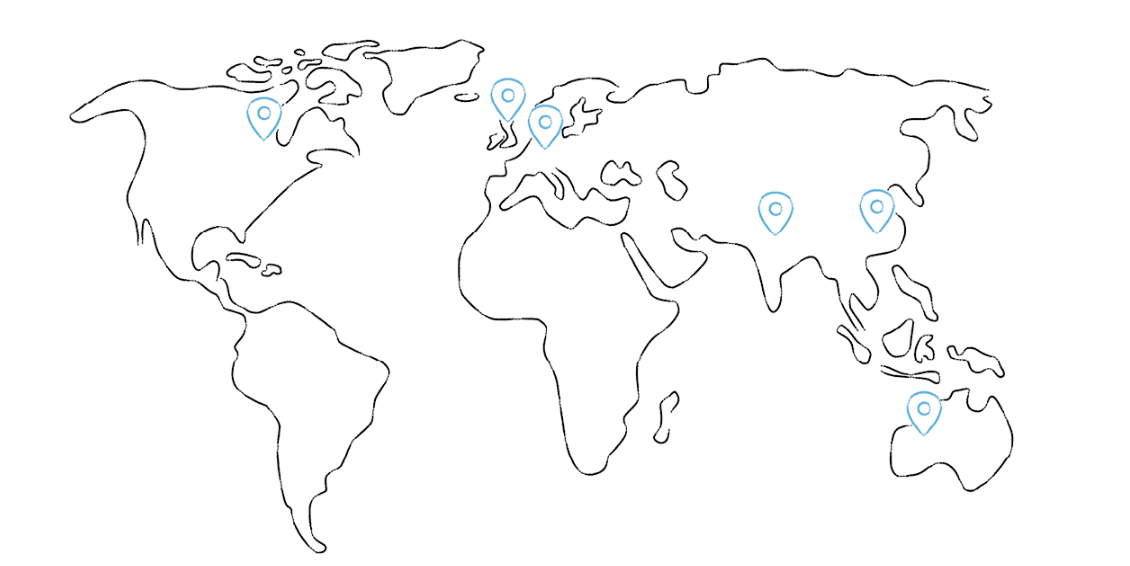
This is exactly where Brilliant shines. With seven fulfillment locations across four continents—including the US, UK, EU, Australia, India, and Hong Kong—Brilliant acts as a "worldwide wingman" for global brands. Their network allows teams to source and ship to over 180 countries while maintaining a local, personalized feel.
Take Arctic Wolf, for example. Before partnering with Brilliant, they faced unpredictable shipping costs (averaging $99+ per overseas package) and frequent fulfillment errors. By leveraging Brilliant's global fulfillment services, Arctic Wolf achieved a massive 50% cost savings on global shipping, dropping their average shipment cost to just $49 (Brilliant Case Study).
Brilliant handles the entire lifecycle:
Warehousing: Secure "cloud" storage with 24/7 real-time inventory data and quality assurance.
Fulfillment: Meticulous packaging with custom boxes and personalized notecards.
Distribution: Expert management of DDP shipping and cross-border customs clearance to ensure recipients never face surprise fees.
Instead of a manual process requiring endless follow-ups, teams can use Brilliant's automated triggers and branded storefronts to scale their programs globally. Plus, with rigorous DPA, CCPA, and GDPR compliance built-in, your data stays secure.
Conclusion
To successfully send corporate gifts internationally in 2026, you have to respect the logistics. By insisting on DDP shipping, staying ahead of EU and Mexico customs reforms, diversifying your carriers, and protecting recipient data, you can deliver joy instead of a logistical nightmare. And when you're ready to scale without losing your mind, partnering with a tech-forward platform is the strategic advantage for global gifting success.
